Synthetic Intelligence vs Artificial Intelligence: With Real Examples
Synthetic intelligence is an informal label, not a defined field. This article examines what multi-step AI systems really involve, from tool-using agents to compounding errors in workflows.
"Synthetic intelligence" is not an established technical category with an agreed definition. It is a label that some writers use for a pattern visible in current AI products: instead of one model answering one question, several components, often including language models and software tools, are chained to carry out a multi-step task. This article uses the term loosely for that pattern, asks what the pattern involves technically, and examines where it works and where it does not. The distinction is a helpful framing for discussion, not a scientific boundary, and the underlying technology is still artificial intelligence as the field defines it.

What the standard definition of AI already covers
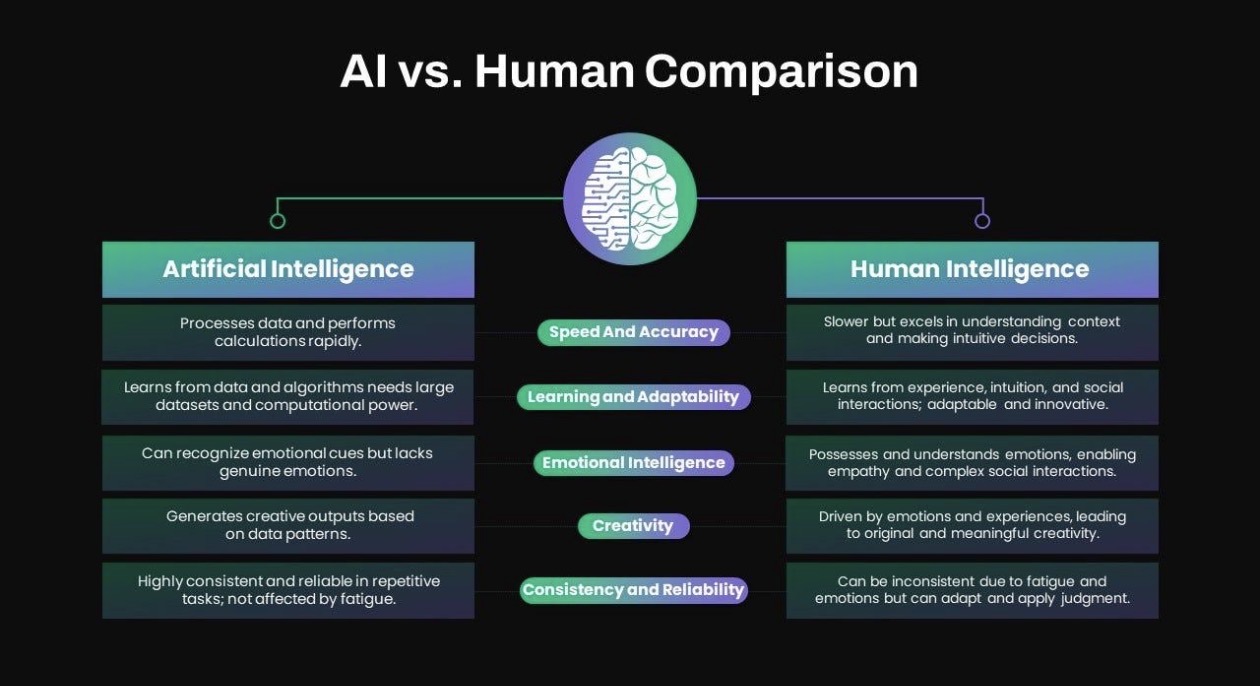
The standard textbook framing, in Russell and Norvig's Artificial Intelligence: A Modern Approach, treats AI as the study of agents that perceive an environment and act to achieve goals. Under that definition a thermostat-like rule system, a classifier, a recommender and a planning system are all AI. A narrow reading in which AI only "analyses and predicts" omits planning, search and reinforcement learning, which have always involved sequences of actions. So the useful question is not whether a new kind of intelligence has appeared, but what changes when predictive models are embedded in longer pipelines.
Generation, as distinct from prediction
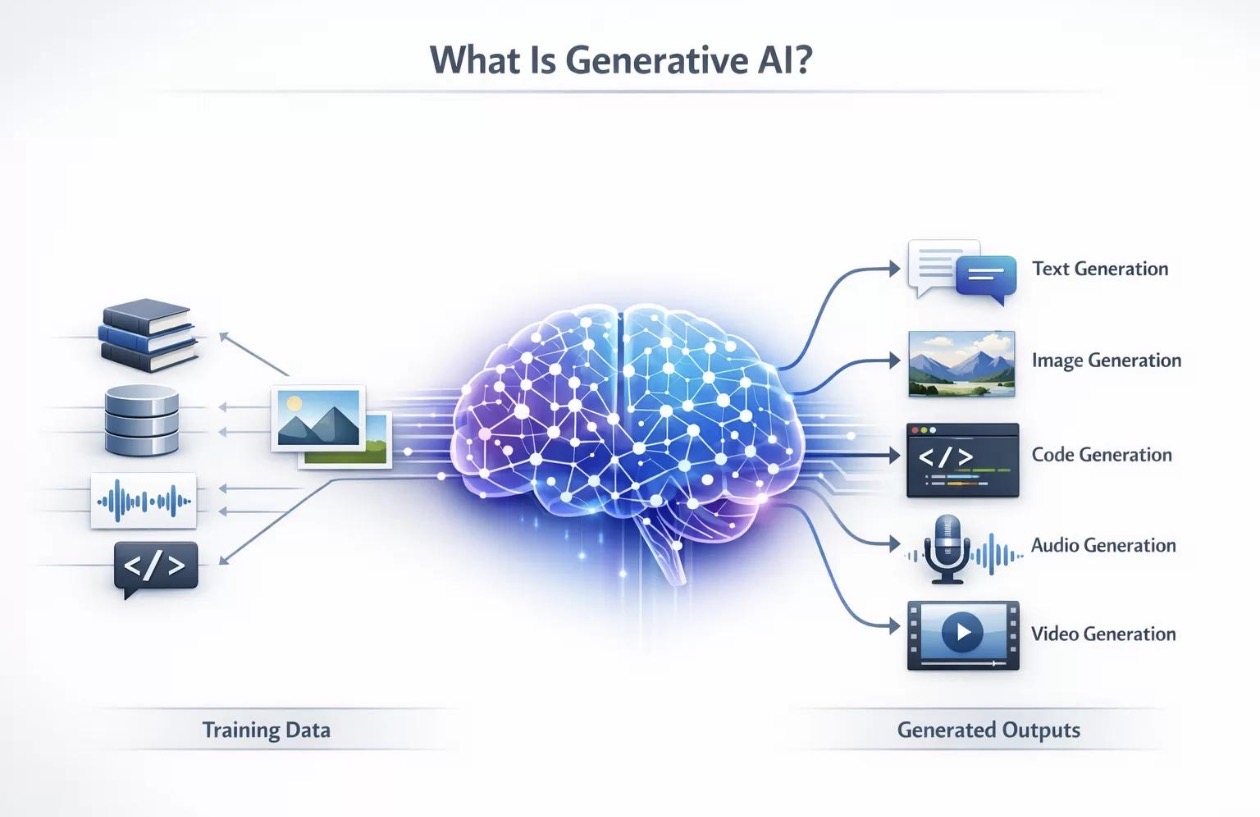
A discriminative model estimates a label given an input: whether a transaction is fraudulent, what a house is worth. A generative model learns the distribution of the data itself and can produce new samples, such as text, images or code. Large language models are trained to predict the next token in a sequence; that simple objective, at scale, yields systems that can write, summarise and translate. The "synthesis" in the framing refers to this generative capability, and what distinguishes it technically is that the output space is open-ended, so correctness is harder to check than with a fixed set of labels.
A worked contrast: predicting house prices
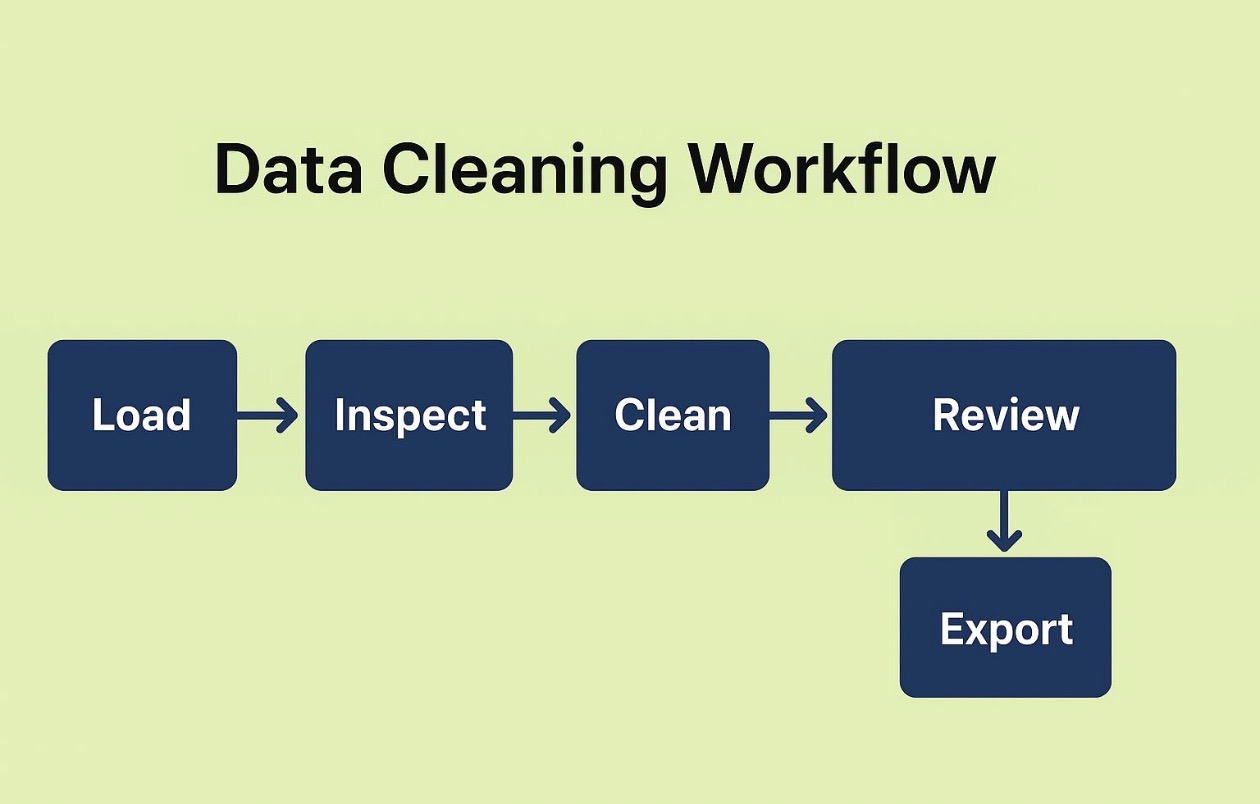
Take the classic regression task. A conventional approach fits a model, for example gradient-boosted trees or a regularised linear model, to a table such as the Ames Housing dataset (De Cock, 2011), and reports a prediction with an error measure like root mean squared error on held-out data. A multi-step system built around that task might additionally inspect the table for missing values, propose feature transformations, train several candidate models, compare them by cross-validation, and write an explanation. Each of those steps is separately useful, and automated machine-learning tools have performed several of them for years.
The added value is convenience and coverage. The added risk is that each automated decision is a place for an error to enter without anyone looking at it. Examples include data leakage, where information from the test period is used in feature creation; target leakage, where a feature encodes the answer; and hyperparameter search on the same data used for the final score. A pipeline that produces a polished report can make a flawed analysis look more authoritative than a plain script would.
A second contrast: research data analysis
For a research dataset, a system might read files, handle missing values, run summary statistics, plot distributions and draft a methods paragraph. This is a real time-saver for routine work, but several scientific decisions are not routine. How missing values are handled (deletion, imputation, modelling the missingness) can change conclusions. Choosing a statistical test depends on the design of the study and on assumptions that should be checked and reported. Running many analyses and reporting the best invites the multiple-comparisons problem. A system that makes these choices silently shifts the responsibility without removing it: the researcher remains accountable for the analysis and should be able to reproduce and defend each step.
How tool-using agents work
The research behind multi-step systems is concrete. In the ReAct approach (Yao et al., 2023), a language model alternates between producing a reasoning step and taking an action, such as a search query, and then reads the result before continuing. Toolformer (Schick et al., 2023) trained a model to decide when to call external tools like a calculator or search engine. In deployed systems, an orchestrating program feeds the model a task and a list of available tools, parses the model's chosen action, executes it, appends the result to the context, and repeats until a stopping condition is met. The model itself still generates text; the surrounding program turns that text into actions.

The arithmetic of long workflows
The main technical problem with chaining is compounding error. If each step succeeds independently with probability 0.95, a ten-step workflow succeeds only about 60 per cent of the time (0.9510 is roughly 0.60). Steps are not independent in practice, and some failures are recoverable, but the calculation shows why reliability, not capability on a single step, limits what multi-step systems can do. It is also why measuring end-to-end task success matters. Benchmarks such as SWE-bench (Jimenez et al., 2024), which asks systems to resolve real software issues and checks the result against tests, were built to measure exactly that, and the reported success rates have been well below those of single-step question-answering benchmarks.
Why the framing matters, and its risks
- Productivity. Routine multi-step work, such as formatting, cleaning and drafting, can be accelerated for students and researchers.
- Auditability. More automation means more hidden decisions. Logs of each step, versioned inputs and fixed random seeds are needed for results to be reproducible.
- Error propagation. An early mistake, such as a mis-parsed column, flows silently into every later step.
- Over-trust. Fluent explanations from a language model are not evidence of correctness; they describe, they do not verify.
Limitations and open questions
- There is no agreed test for when a system is a "connected, problem-solving" one rather than a script calling a model, so the term cannot support quantitative claims.
- Models can state plausible but false intermediate facts, and a later step may build on them.
- Security is an open issue: a system that reads untrusted documents and acts on them can be manipulated by instructions embedded in that content.
- How to evaluate generated scientific analyses, beyond whether the code runs, is unresolved.
What researchers should watch
- End-to-end success rates on realistic tasks, with the number of attempts and human interventions disclosed.
- Whether a system exposes its intermediate steps so each can be checked and rerun.
- Comparisons against a simple baseline script for the same task, to see what the added machinery buys.
- Standard validation habits, such as held-out data, a pre-specified analysis plan and sensitivity checks, applied to automated analyses just as to manual ones.
References and further reading
- Russell S., Norvig P. Artificial Intelligence: A Modern Approach. Pearson.
- Yao S. et al. ReAct: Synergizing Reasoning and Acting in Language Models. ICLR, 2023.
- Schick T. et al. Toolformer: Language Models Can Teach Themselves to Use Tools. NeurIPS, 2023.
- Jimenez C. E. et al. SWE-bench: Can Language Models Resolve Real-World GitHub Issues? ICLR, 2024.
- De Cock D. Ames, Iowa: Alternative to the Boston Housing Data as an End of Semester Regression Project. Journal of Statistics Education, 2011.