Latest Moon Landing & Artemis News 2026
What Artemis II was designed to test, why the lunar south pole matters, and which parts of the programme are demonstrated, planned or still uncertain.
Lunar exploration news tends to arrive as announcements: a launch date, a crew, a schedule. This piece tries to do something slightly different. It sets out what Artemis is designed to accomplish, what technical problems the programme still has to solve, and which of the stories circulating about it are well established and which are plans that may change. Where dates or counts appear, they should be checked against NASA's current mission pages, because the programme's schedule has moved repeatedly.
Artemis II: what a crewed lunar flyby is for
NASA's Artemis II mission carried four astronauts, Reid Wiseman, Victor Glover, Christina Koch and Jeremy Hansen, on a roughly ten-day flight around the Moon aboard the Orion spacecraft, launched by the Space Launch System. Hansen is a Canadian Space Agency astronaut, and the rest are NASA astronauts. It was the first crewed flight beyond low Earth orbit since Apollo 17 in 1972, which is the basis for the "more than 50 years" figure often quoted.
The flight was not a sightseeing trip. Artemis I in 2022 flew Orion uncrewed, and one of its findings was that the heat shield lost more charred material on re-entry than engineers had predicted, which NASA investigated before committing a crew. Artemis II therefore served as a test of the systems that keep people alive: life support, communications, manual flying qualities, radiation monitoring and the re-entry itself. Crewed flight data on these systems is what lets later missions proceed to a landing with an acceptable risk.
The crew members for the mission were:
- Reid Wiseman (NASA), commander
- Victor Glover (NASA), pilot
- Christina Koch (NASA), mission specialist
- Jeremy Hansen (Canadian Space Agency), mission specialist
Why the south pole
Artemis planning concentrates on the Moon's south polar region, and the reason is mostly scientific and logistical rather than symbolic. The Moon's rotation axis is tilted only about 1.5 degrees to the plane of its orbit around the Sun, so the floors of some deep polar craters never receive direct sunlight. These permanently shadowed regions can be colder than about 100 kelvin, cold enough to trap volatile compounds for very long periods. Evidence that water is present at the poles comes from several sources, including the 2009 LCROSS impact experiment, which observed water in the ejecta plume, and spectrometer observations from the Chandrayaan-1 mission that found hydration at the surface. How much water there is, in what form and how easily it could be extracted are still open questions that landers and rovers are meant to answer.
Nearby ridges, by contrast, can see sunlight for much of the year, which makes them candidate sites for solar power. The combination of power and ice at close range is the argument for building a base there. Challenges include extreme thermal contrasts, difficult lighting for navigation and landing, and lunar dust, which is abrasive and clings to equipment.
Surface infrastructure: plans versus commitments
NASA and its partners have described a long-term presence that could include habitats, pressurised and unpressurised rovers, power systems, communication relays and laboratories. These are plans at different stages of definition, and funding, schedules and designs have changed more than once. When reading reports about a "permanent Moon base", it helps to ask which element is contracted, which is in development and which is only a concept. Statements about specific announcements or briefings should be treated as dated news items rather than as lasting facts.
The programme also operates inside a broader framework. The Artemis Accords, a set of non-binding principles for civil space activity, have been signed by a growing number of countries, and they address issues such as transparency, interoperability and the protection of heritage sites. Questions of resource extraction and "safety zones" around operations are interpreted differently by different governments and remain a subject of legal debate.
Navigation without GPS
There is no navigation satellite constellation at the Moon, and early missions rely on tracking from Earth, which is limited by geometry and by the need to schedule antenna time. Several approaches are under study to give astronauts and rovers more autonomy: orbiting relay and navigation satellites, shared communication and navigation standards for lunar operations such as the LunaNet framework, optical navigation by matching camera images to terrain maps, and laser ranging to reflectors. The Apollo-era retroreflectors still return laser pulses from Earth, and newer, more capable reflector designs have been proposed. Ideas such as laser beacons placed in craters appear in research proposals, but it is important to distinguish a proposed technology from a deployed one. For readers in navigation or robotics, the lunar problem is attractive because of degraded lighting, sparse landmarks and long communication delays at certain sites.
Artemis III and beyond: the lander problem
The step from flyby to landing depends on the human landing system. NASA selected SpaceX's Starship-based lander and later added Blue Origin's Blue Moon lander. Both rely on technology that has not yet completed its full demonstration sequence, notably in-orbit refuelling of large vehicles in the Starship case. NASA has described Artemis III as a mission that tests rendezvous, docking and the interaction with commercial landers, with landings assigned to later flights, and Artemis IV and V as steps toward sustained surface operations. The programme's order of missions and their content have been revised more than once, so the manifest on NASA's own site is the authority.
Independent reviews, including reports by NASA's Office of Inspector General and the Government Accountability Office, have repeatedly raised concerns about cost, schedule and the heat shield. These documents are public, and they are a good counterweight to promotional coverage.
The photographs
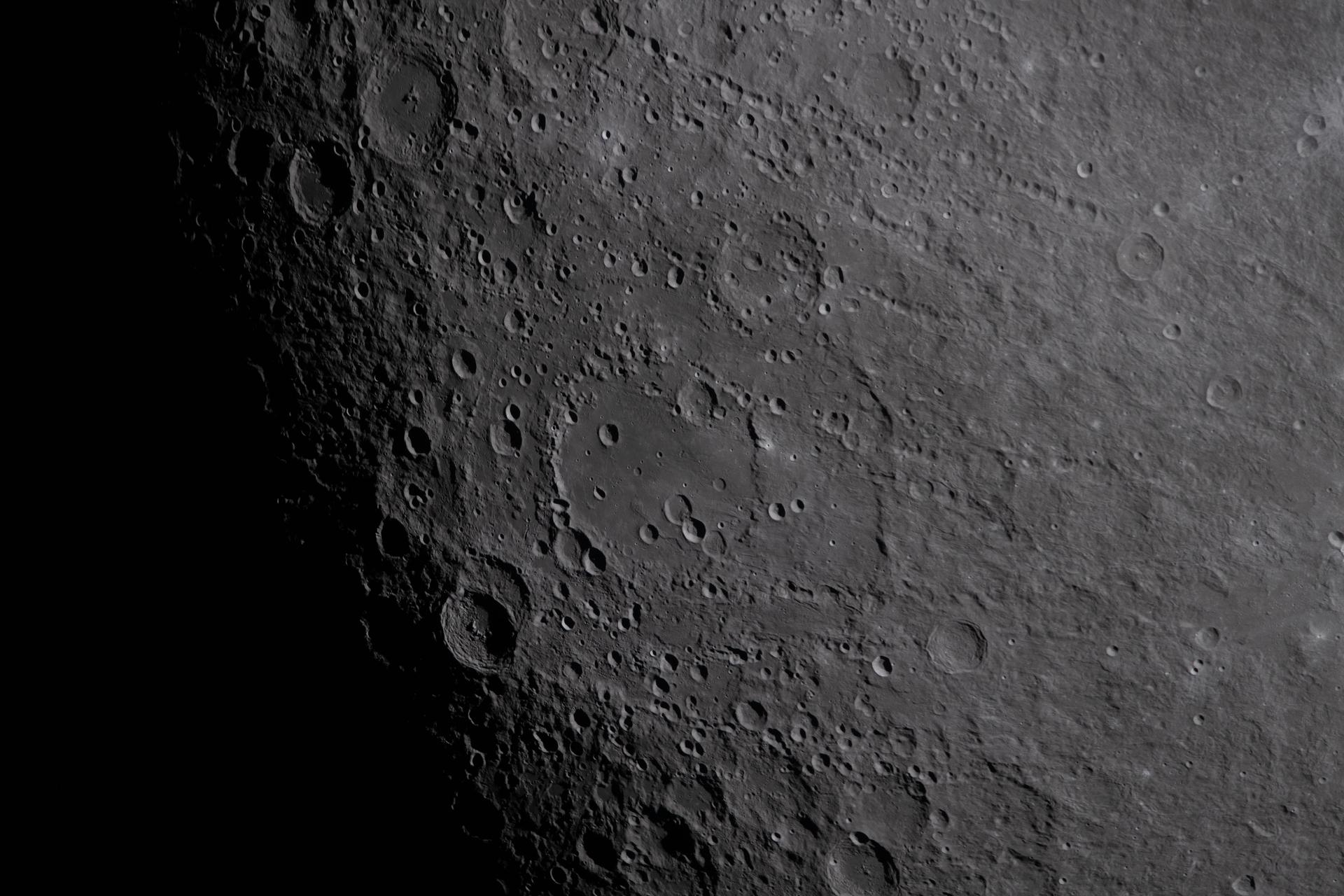
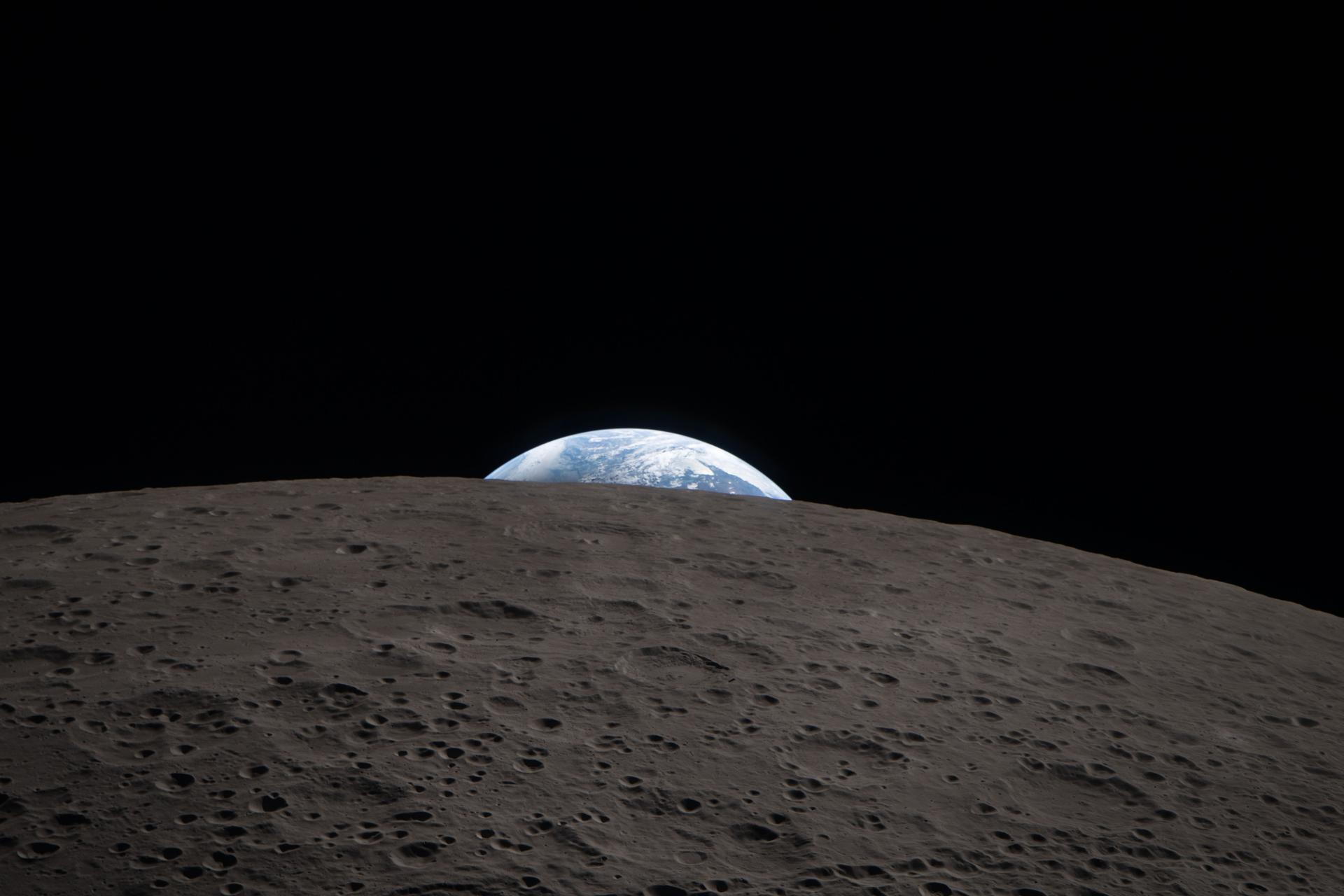
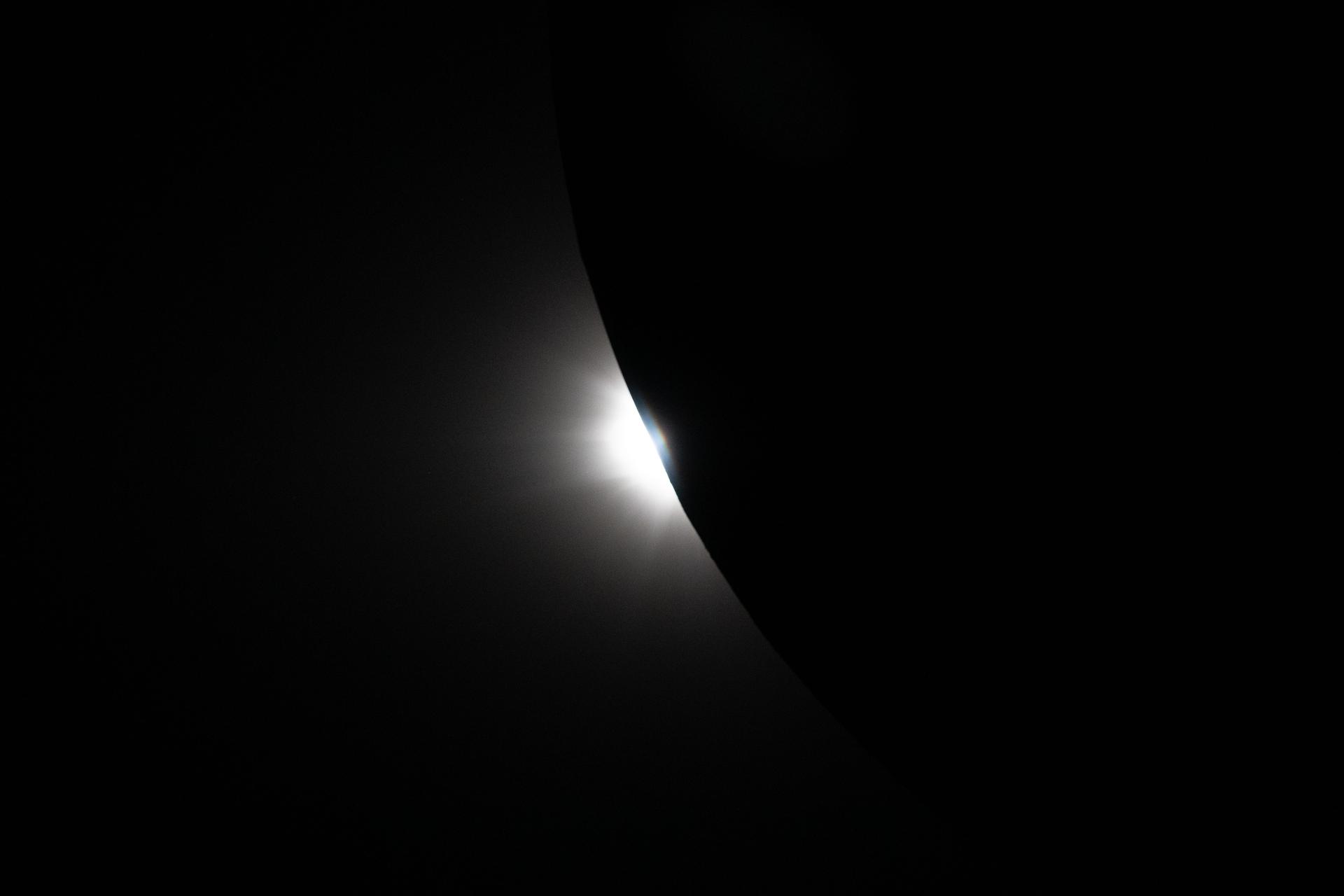
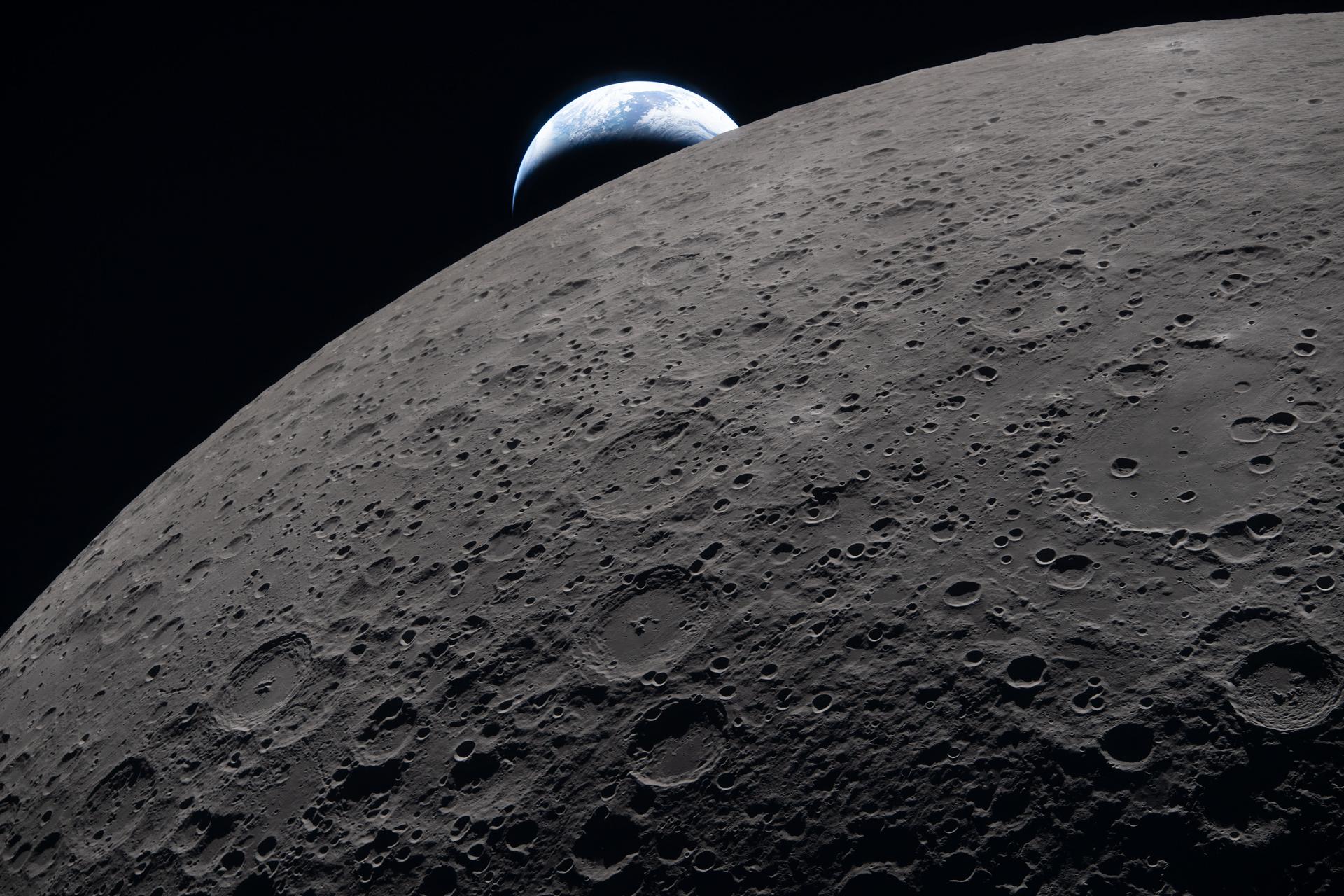
NASA releases large numbers of mission images, and astronaut photography from lunar distance gives scientists something beyond engineering telemetry: Earth's phase and cloud cover, lunar albedo, the appearance of surface features under different lighting. The number of images released and their release schedule are best taken from NASA's image archives. The pictures on this page are illustrative lunar images and should not be read as specific frames from a given mission.
Limitations and open questions
- Lunar water. Detections are real, but abundance, distribution and purity are uncertain, which affects whether the resource is practical to use.
- Human health. Beyond Earth's magnetosphere crews face higher radiation exposure. Short flybys are within accepted limits, whereas long stays raise unresolved questions.
- Heat shield and re-entry. The Artemis I observations were the subject of a formal investigation, and the margin for steeper or faster re-entries is a design concern.
- Commercial landers. Schedule and cost depend on demonstrations not yet complete.
- Science return. How much surface science will fit among engineering priorities is not yet settled.
What researchers should watch
- Whether orbital propellant transfer is demonstrated at the scale a lander needs.
- Results from commercial and government robotic landers aimed at the polar regions, which give ground truth on ice and terrain.
- The evolution of navigation and communication standards, relevant to anyone working on autonomy or delay-tolerant networking.
- Updates to the mission manifest, which determine when samples and in-situ data will actually become available.
References and further reading
- NASA. Artemis programme and Artemis II mission pages (nasa.gov/artemis).
- Colaprete, A., et al. "Detection of Water in the LCROSS Ejecta Plume." Science, 330, 463, 2010.
- Pieters, C. M., et al. "Character and Spatial Distribution of OH/H2O on the Surface of the Moon Seen by M3 on Chandrayaan-1." Science, 326, 568, 2009.
- NASA Office of Inspector General. Reports on the Artemis programme, including the 2024 audit of the Orion heat shield.
- Artemis Accords: Principles for Cooperation in the Civil Exploration and Use of the Moon, Mars, Comets, and Asteroids for Peaceful Purposes, 2020.