Latest Research: Scientists Reveal New Clues to How Supermassive Black Holes Grow
For decades, one of astronomy’s greatest mysteries has been surprisingly simple to ask but extraordinarily difficult to answer: How did supermassive black holes become so enormous so quickly?
For decades, one of astronomy’s greatest mysteries has been surprisingly simple to ask but extraordinarily difficult to answer: How did supermassive black holes become so enormous so quickly?
These cosmic giants, containing millions or even billions of times the Sun’s mass, occupy the centers of most large galaxies—including our own Milky Way. Yet observations show that some of them already existed less than a billion years after the Big Bang, leaving scientists with very little time to explain their rapid growth.
Now, a series of recent observations from next-generation telescopes, combined with advanced computer simulations, is providing the clearest picture yet of how these extraordinary objects formed and evolved. Rather than growing through a single process, researchers now believe that supermassive black holes likely followed multiple pathways, including rapid gas accretion, galaxy mergers, and the formation of unusually massive “seed” black holes in the early Universe.
The Universe’s Biggest Gravity Wells
A black hole forms when enough matter is compressed into an incredibly small region, producing gravity so strong that even light cannot escape.
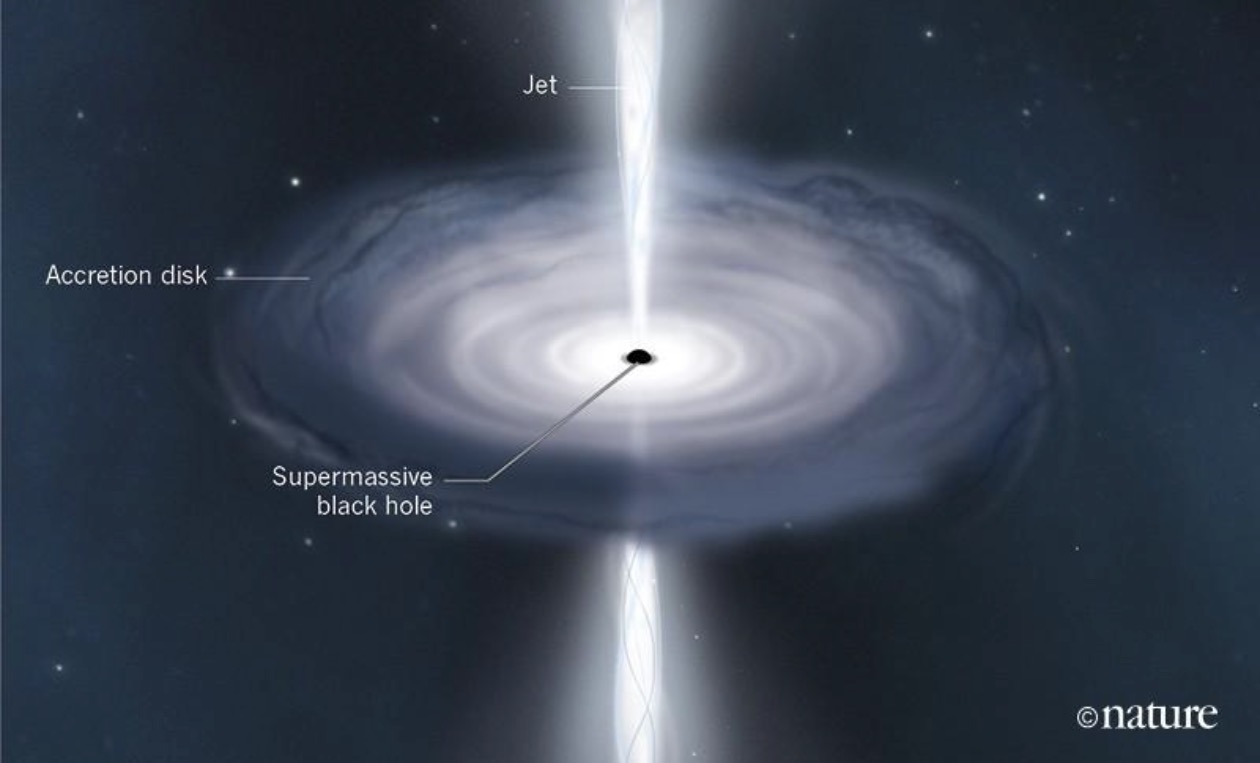
Supermassive black holes are fundamentally different from the stellar black holes created by collapsing stars. Instead of weighing a few dozen solar masses, these giants range from millions to tens of billions of solar masses and reside at the centers of galaxies, where they influence the motion of stars, gas, and even galaxy evolution itself.
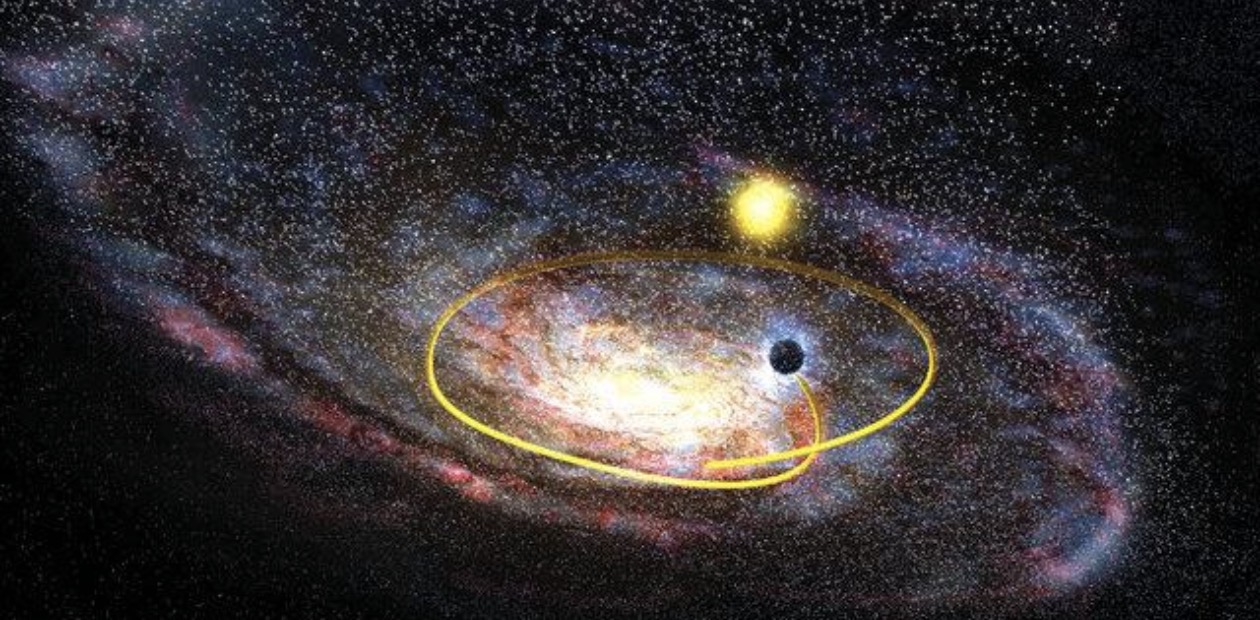
Astronomers have discovered that nearly every massive galaxy hosts one of these cosmic giants. Even the Milky Way contains a supermassive black hole known as Sagittarius A*, located about 26,000 light-years from Earth.
Why Their Growth Is So Puzzling
The challenge is one of time.
According to the standard cosmological model, the Universe is approximately 13.8 billion years old. However, the James Webb Space Telescope has detected surprisingly massive black holes that existed when the Universe was only a few hundred million years old.
Under traditional growth models, black holes should not have accumulated enough material to reach such enormous masses so quickly. This discrepancy has become one of the most important unsolved problems in modern astrophysics.
Feeding at Extraordinary Rates
One explanation is that early black holes consumed surrounding gas much faster than scientists once believed.
Normally, radiation produced by infalling material creates outward pressure that limits how rapidly matter can fall into a black hole. This theoretical limit is known as the Eddington limit.
Recent observations, however, have identified quasars whose central black holes appear to be growing at many times this limit. One newly studied object may be accreting matter at roughly 13 times the expected maximum rate while simultaneously producing powerful X-rays and energetic radio jets—behavior that challenges current theoretical models.
If such extreme feeding episodes were common in the early Universe, they could explain how some black holes became enormous in only a few hundred million years.
Born Big Instead of Growing Slowly
Another emerging idea suggests that some black holes may have started life much larger than previously assumed.
Instead of forming only from dying massive stars, researchers propose that enormous clouds of pristine gas in the early Universe may have collapsed directly into black holes containing 10,000 to 100,000 solar masses.
These “heavy seeds” would require far less subsequent growth to become the billion-solar-mass giants observed today.
Recent cosmological simulations indicate that this scenario naturally reproduces many of the massive black holes now being discovered by modern observatories. Future gravitational-wave missions may determine whether these heavy seeds truly existed.
Galaxy Collisions Also Fuel Growth
Black holes do not evolve in isolation.
Galaxies frequently collide and merge over billions of years. During these interactions, enormous amounts of gas are driven toward galactic centers, providing fresh material for black holes to consume.
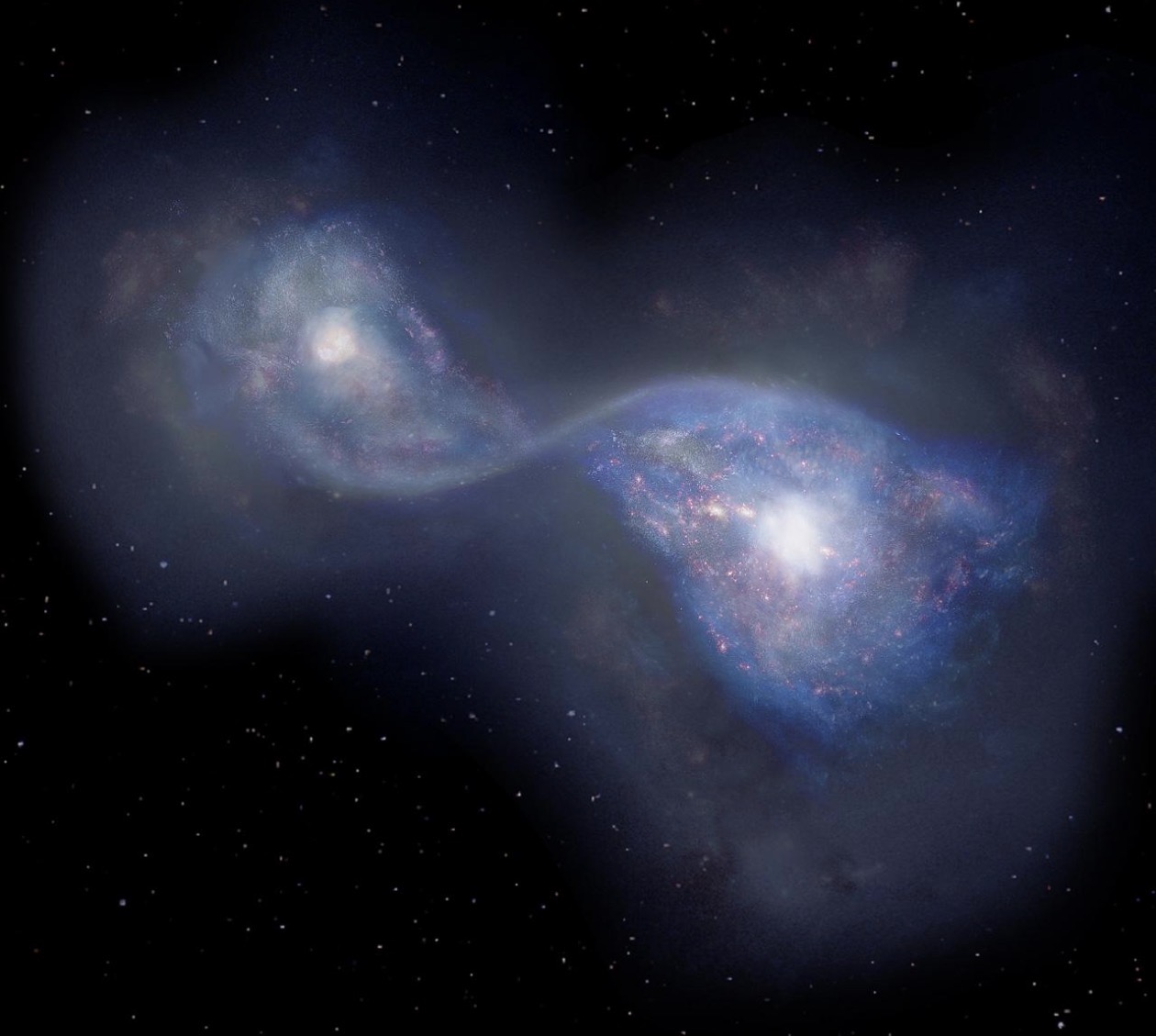
Eventually, the central black holes themselves can merge, producing an even larger supermassive black hole while releasing enormous amounts of energy through gravitational waves.
Recent observations of multiple galaxies merging in the early Universe suggest that this process may have played a major role in building both giant galaxies and their central black holes.
The James Webb Space Telescope Is Changing Everything
Since beginning scientific operations, the James Webb Space Telescope has transformed black hole research.
Its unprecedented infrared sensitivity allows astronomers to observe galaxies that formed only a few hundred million years after the Big Bang.
Instead of finding only small young galaxies, Webb has revealed surprisingly mature systems containing unexpectedly massive black holes.
These discoveries suggest that black hole formation began earlier and progressed faster than many previous models predicted. Each new observation is forcing scientists to refine long-standing theories about the first billion years of cosmic history.
Even Quiet Black Holes Shape Galaxies
Supermassive black holes do more than consume matter.
Astronomers recently detected a long-predicted wind flowing from Sagittarius A*, the relatively quiet black hole at the center of our own galaxy. Although much weaker than the powerful outflows seen in active galaxies, this gentle wind appears capable of redistributing gas and influencing future star formation.
The finding confirms that even inactive black holes can significantly affect their galactic environments over thousands of years.
A New Picture Is Emerging
Rather than relying on a single explanation, astronomers increasingly believe that supermassive black holes grow through a combination of processes:
- Rapid accretion of surrounding gas.
- Repeated mergers between galaxies and black holes.
- Formation from unusually massive primordial seeds.
- Feedback mechanisms that regulate long-term growth.
Different galaxies may experience different combinations of these mechanisms depending on their environment and cosmic history.
Looking Ahead
The next decade promises to be one of the most exciting periods in black hole research.
Future observatories, including next-generation gravitational-wave detectors and even more powerful space telescopes, will allow astronomers to witness black hole mergers across cosmic time and test competing theories about their origins.
What once appeared to be impossible—explaining billion-solar-mass black holes in the infant Universe—is gradually becoming understandable through increasingly precise observations and sophisticated simulations.
Each new discovery reminds us that black holes are not merely cosmic vacuum cleaners. They are engines of galaxy evolution, laboratories for extreme physics, and essential clues to understanding how the Universe itself evolved from its earliest moments.
⸻
FAQ
How do supermassive black holes grow?
They grow primarily by pulling in gas and dust, merging with other black holes, and possibly starting from massive “seed” black holes formed shortly after the Big Bang.
Why are scientists surprised by early supermassive black holes?
Many were already billions of solar masses when the Universe was less than one billion years old, leaving very little time for conventional growth models.
What role has the James Webb Space Telescope played?
JWST has detected extremely distant galaxies hosting unexpectedly massive black holes, providing crucial evidence that black hole growth began earlier and proceeded faster than previously believed.
Can black holes influence entire galaxies?
Yes. Through powerful radiation, jets, and outflowing winds, supermassive black holes regulate star formation and help shape the evolution of their host galaxies.