Dark Matter: The Invisible Force Shaping the Universe — Latest Research, Evidence, and Future Discoveries
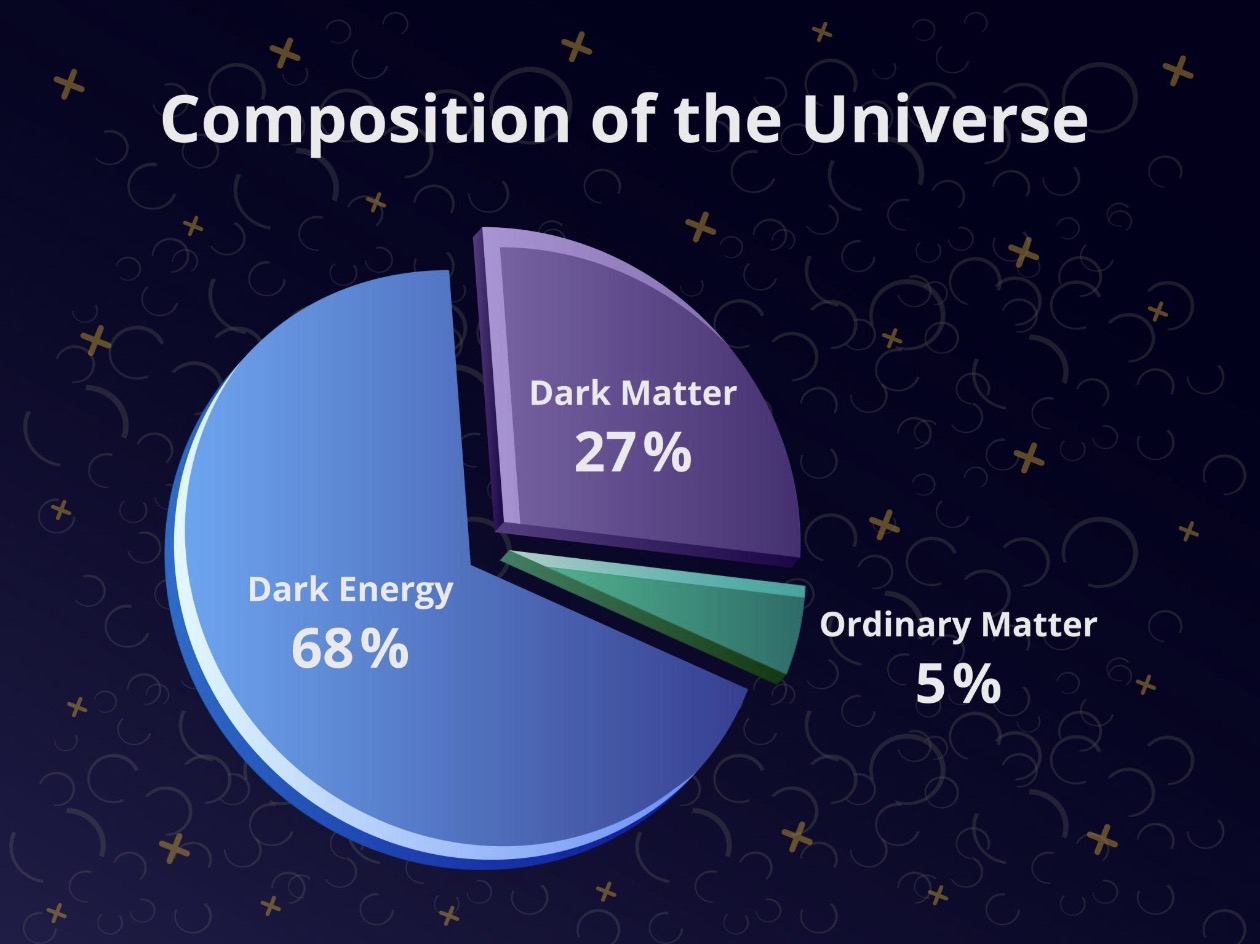
Dark matter is one of the greatest mysteries in modern astrophysics. Although it cannot be seen directly, scientists believe it makes up nearly 27% of the universe and about 85% of all matter, inferred through its gravitational effects on galaxies and cosmic structures.
Abstract
Dark matter is one of the greatest mysteries in modern astrophysics. Although it cannot be seen directly, scientists believe it makes up nearly 27% of the universe and about 85% of all matter. Its existence is inferred through gravitational effects on galaxies, galaxy clusters, and cosmic structures.
Over the past few decades, advances in astronomical observations, particle physics, and artificial intelligence have significantly improved our understanding of this invisible substance. While its true nature remains unknown, ongoing experiments and space missions are bringing researchers closer than ever to solving one of science’s biggest puzzles. This article explores the evidence supporting dark matter, the latest discoveries, current research efforts, and what future observations may reveal.
Keywords: Dark Matter, Cosmology, Astrophysics, Galaxy Rotation, Gravitational Lensing, Euclid Mission, Vera Rubin Observatory, Particle Physics
Introduction
Every star, planet, galaxy, and nebula visible through telescopes represents only a small portion of the universe. According to modern cosmology, ordinary matter accounts for less than 5% of the universe’s total energy and matter content. The remaining majority consists of dark energy and dark matter, both of which remain largely mysterious.
Dark matter does not emit, absorb, or reflect light, making it invisible to conventional telescopes. Yet its gravitational influence is observed everywhere—from the motion of stars within galaxies to the formation of massive galaxy clusters. Without dark matter, scientists struggle to explain why galaxies rotate the way they do or how the universe developed its enormous cosmic web.
The search for dark matter has become one of the most important scientific challenges of the twenty-first century, combining astronomy, particle physics, cosmology, and computational science.
Why Scientists Believe Dark Matter Exists
The strongest evidence for dark matter comes from multiple independent observations.
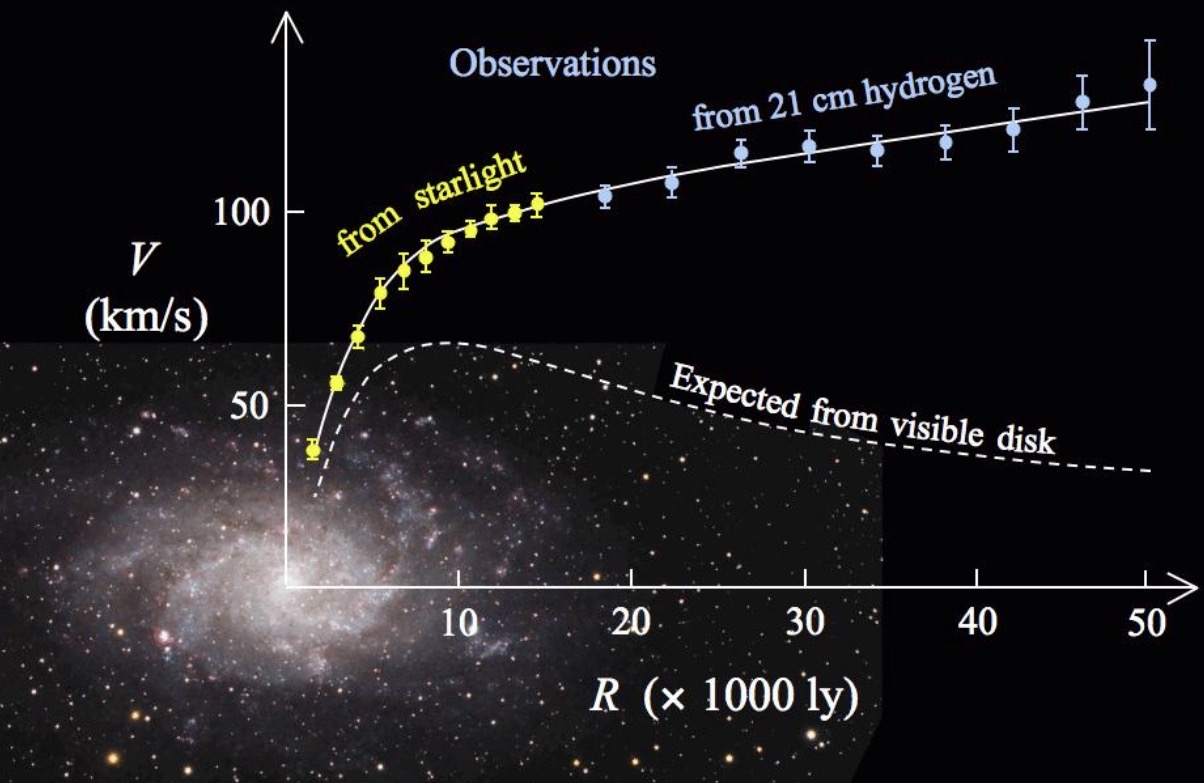
One of the earliest clues came from galaxy rotation curves. According to classical physics, stars farther from a galaxy’s center should orbit more slowly because less visible mass exists at larger distances. Instead, astronomers observed that stars continue moving at nearly constant speeds, indicating that a large amount of unseen mass surrounds galaxies.
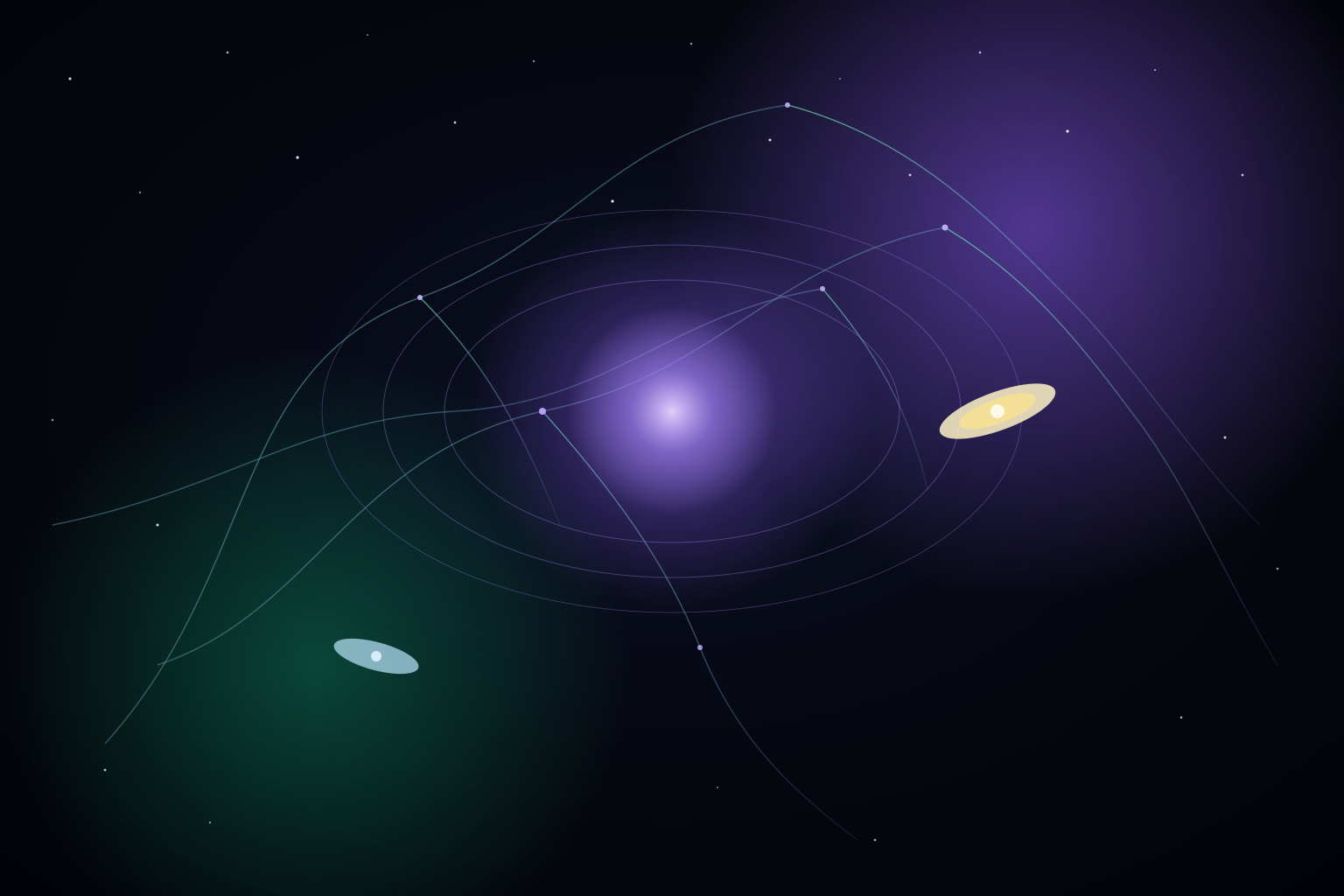
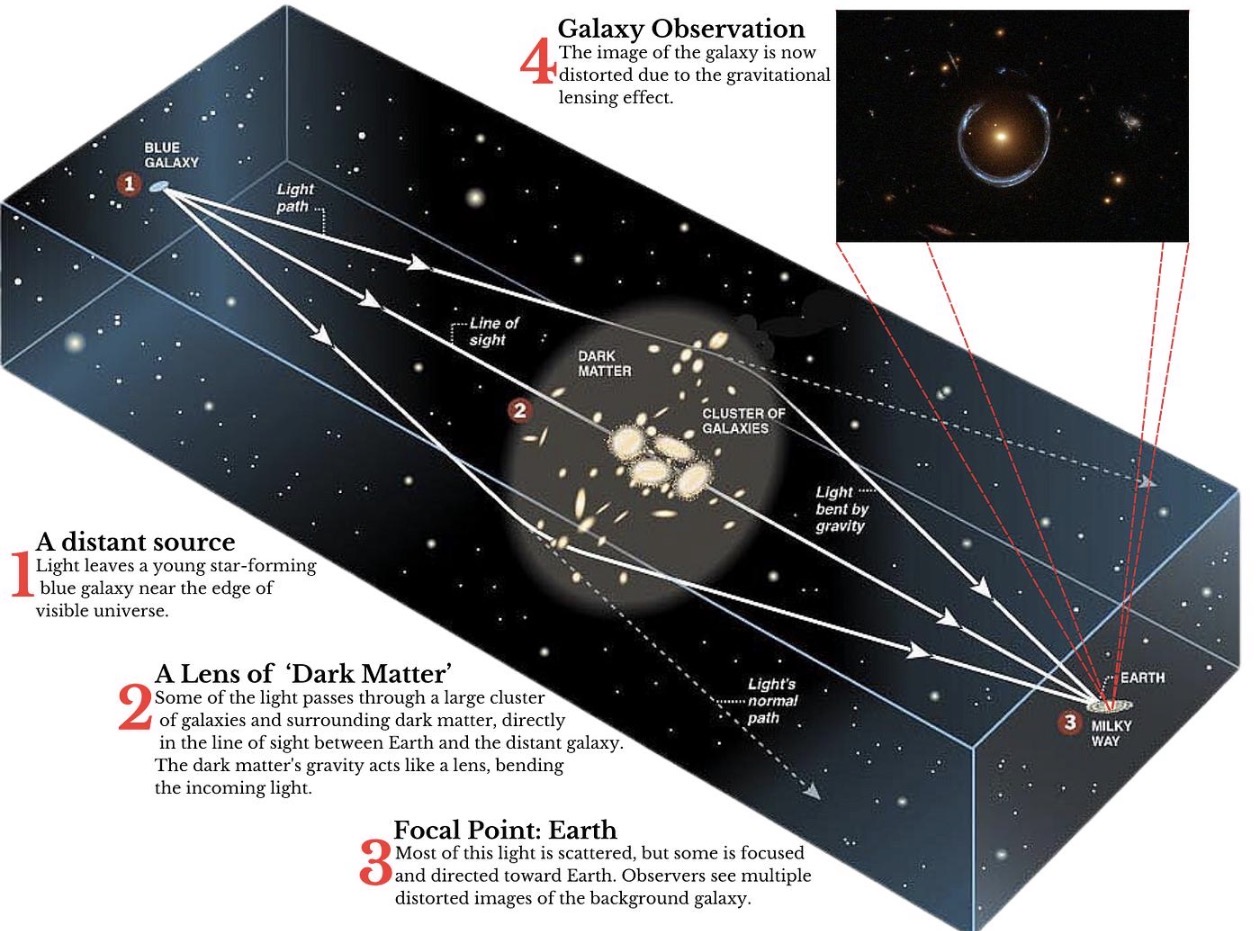
Another powerful line of evidence comes from gravitational lensing. Einstein’s theory of general relativity predicts that massive objects bend light. Observations show that galaxy clusters bend light far more than visible matter alone can explain. The additional gravitational pull strongly suggests the presence of invisible matter.
Measurements of the Cosmic Microwave Background (CMB) also support the existence of dark matter. Tiny temperature variations preserved from the early universe reveal that ordinary matter alone cannot explain today’s large-scale cosmic structures. Computer simulations incorporating dark matter closely match the observed distribution of galaxies throughout the universe.
Because these observations rely on completely different methods, together they provide compelling evidence that dark matter is a genuine component of the cosmos rather than an observational error.
What Could Dark Matter Be?
Although scientists are confident that dark matter exists, its composition remains unknown.
For decades, researchers have searched for Weakly Interacting Massive Particles (WIMPs), hypothetical particles that interact primarily through gravity and the weak nuclear force. Large underground detectors continue searching for these elusive particles.
Another promising candidate is the axion, an extremely light particle predicted by several extensions of the Standard Model of particle physics. Axions could solve multiple theoretical problems while accounting for dark matter.
Other possibilities include sterile neutrinos, primordial black holes formed shortly after the Big Bang, or entirely new particles yet to be discovered.
The absence of direct detection has encouraged scientists to explore increasingly innovative theories, making dark matter research one of the fastest-evolving areas in modern physics.
Latest Research and Technological Advances
The search for dark matter has entered an exciting new phase thanks to advances in technology.
The Euclid Space Telescope is creating one of the most detailed three-dimensional maps of the universe ever produced. By observing billions of galaxies, researchers hope to reveal how dark matter influences the growth of cosmic structures over billions of years.
The Vera C. Rubin Observatory will repeatedly survey the night sky, collecting enormous datasets capable of identifying subtle gravitational effects associated with dark matter.
Meanwhile, underground laboratories equipped with ultra-sensitive detectors continue searching for rare interactions between dark matter particles and ordinary atoms.
Artificial intelligence has also become an essential research tool. Machine learning algorithms can rapidly analyze vast astronomical datasets, identify hidden patterns, improve galaxy classification, and detect subtle anomalies that may indicate dark matter’s presence. AI-driven simulations are helping scientists model the universe with unprecedented precision.
Together, these technologies are transforming dark matter research from a theoretical challenge into a data-driven scientific pursuit.
Future Discoveries
Scientists believe the coming decade could redefine our understanding of the universe.
Future observations may determine whether dark matter is composed of new elementary particles, microscopic black holes, or something entirely unexpected. Next-generation telescopes, quantum sensors, particle accelerators, and AI-powered data analysis will dramatically improve detection capabilities.
Even if dark matter itself remains elusive, each experiment eliminates possibilities and refines theoretical models, bringing researchers closer to the truth.
A confirmed discovery would revolutionize cosmology, particle physics, and our understanding of the fundamental laws governing the universe.
Conclusion
Dark matter continues to challenge humanity’s understanding of reality. Although invisible, its gravitational influence shapes galaxies, controls cosmic evolution, and governs much of the universe’s large-scale structure. Decades of research have produced overwhelming indirect evidence for its existence, yet its true identity remains unknown.
With powerful observatories, advanced underground detectors, and artificial intelligence accelerating scientific discovery, researchers are closer than ever to solving this cosmic mystery. Whether dark matter proves to be an undiscovered particle or evidence of entirely new physics, its eventual discovery will rank among the greatest scientific achievements in human history.
Frequently Asked Questions (FAQ)
1. What is dark matter?
Dark matter is an invisible form of matter that interacts mainly through gravity and makes up most of the matter in the universe.
2. Can scientists see dark matter?
No. It does not emit, absorb, or reflect light, making direct observation impossible with current technology.
3. Why is dark matter important?
It explains galaxy rotation, gravitational lensing, and the formation of large-scale cosmic structures.
4. Has dark matter been discovered?
Scientists have found strong indirect evidence, but no confirmed direct detection has yet been made.
5. How are scientists searching for dark matter?
Researchers use underground particle detectors, space telescopes, astronomical observations, supercomputer simulations, and artificial intelligence to search for evidence.