🌌 Are Black Holes Really Gates to Another Universe?
Black holes are among the most mysterious objects in the universe. Some theories suggest they may not just destroy matter, but could connect to entirely different regions of space or even other universes.
Black holes are among the most mysterious objects in the universe. They are regions in space where gravity is so strong that nothing—not even light—can escape. But beyond this simple definition, scientists are still trying to understand what truly happens inside them.
Some theories suggest that black holes may not just destroy matter, but could also connect to entirely different regions of space or even other universes.
🧠 What Happens Inside a Black Hole?
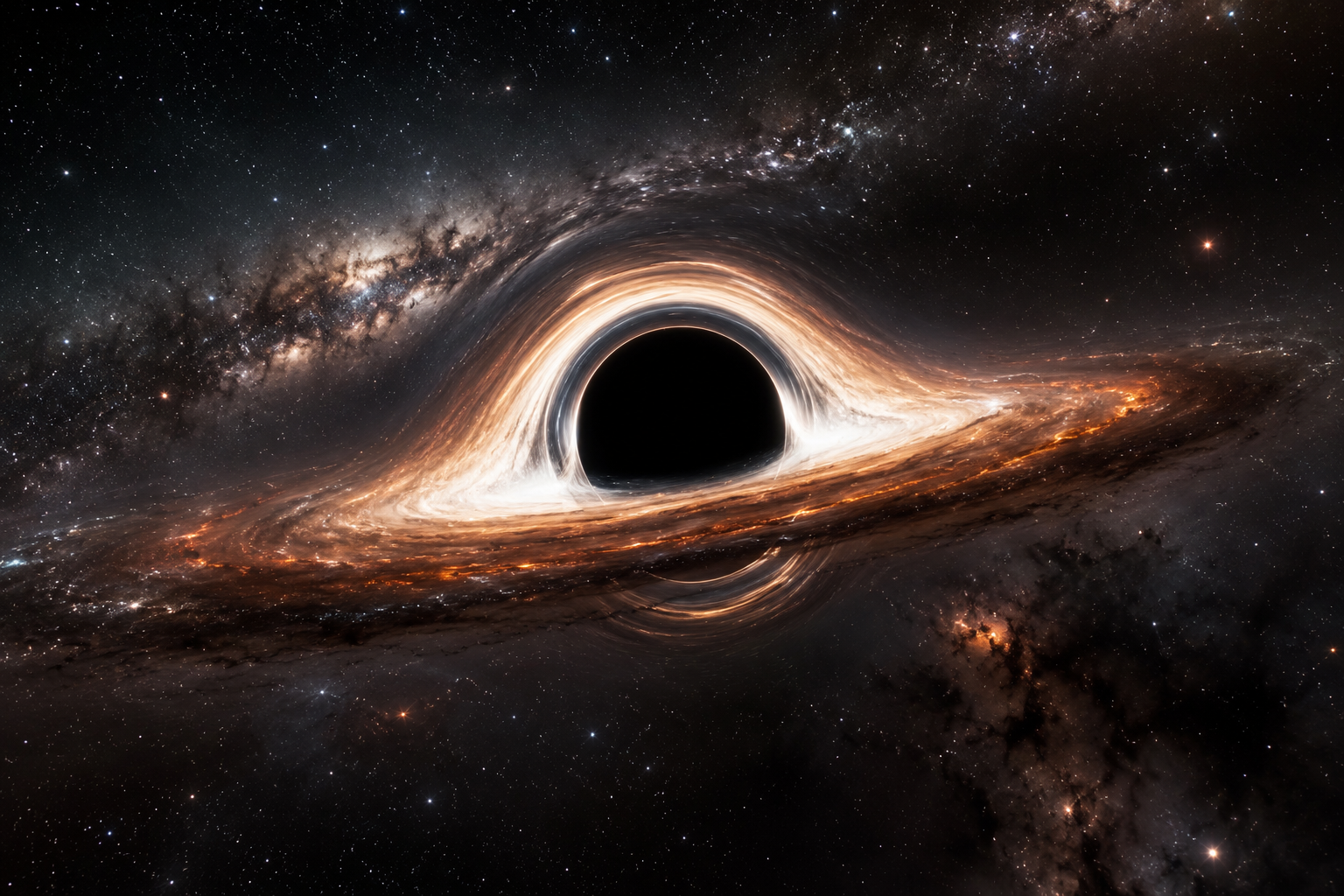
When a star collapses under its own gravity, it can form a black hole. At the center lies something called a singularity, where density becomes extremely high and known laws of physics break down.
Around it is the event horizon, the boundary beyond which nothing can return.
However, what happens beyond this boundary is still unknown.
🌠 Could Black Holes Be Wormholes?
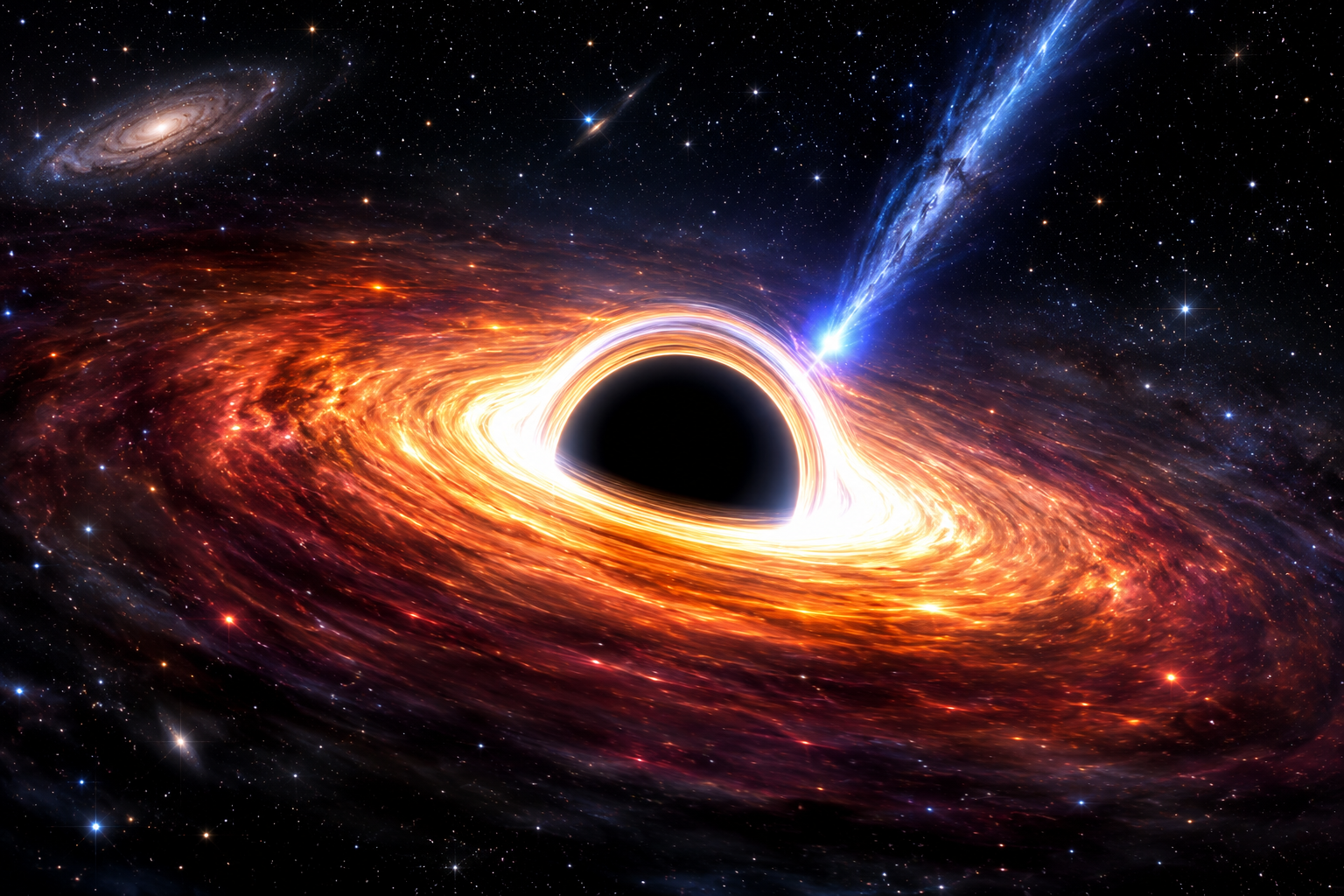
Some theoretical models suggest that black holes might be linked to wormholes—tunnels in space-time that could connect distant parts of the universe.
If true, this could mean:
- Space travel across galaxies
- Connections between different universes
- Shortcuts through space-time
However, there is currently no experimental evidence confirming this idea.
🔭 What Science Says Today
Modern physics, especially Einstein's general relativity, supports the existence of black holes, but does not confirm that they are gateways.
Most scientists believe:
- Black holes compress matter into extreme states
- Information may not fully disappear (still debated)
- The interior structure remains unknown
Space telescopes and gravitational wave detectors are helping scientists study black holes indirectly.
🌌 Why Black Holes Matter
Black holes are important because they help scientists understand:
- Gravity at extreme levels
- Formation of galaxies
- Behavior of space-time
- Limits of current physics theories
Each new discovery brings us closer to understanding how the universe works.
❓ FAQ
Q1: Can anything escape a black hole?
No, not even light can escape once it crosses the event horizon.
Q2: Are black holes dangerous to Earth?
No. The nearest known black hole is far enough away to have no effect on our solar system.
Q3: Do black holes move?
Yes, black holes can move through space like other massive objects.
Q4: Could black holes create new universes?
This is a theoretical idea, but there is no scientific proof yet.
Q5: How are black holes detected?
They are detected through their effect on nearby stars and gravitational waves.
📚 References
- NASA Black Hole Information Center
- European Space Agency (ESA) Black Hole Studies
- LIGO Scientific Collaboration (Gravitational Waves Research)
- Einstein's General Relativity Framework
- Event Horizon Telescope (EHT) Observations
✍️ Author: ScienceTrace Editorial | Published: 2026