Scientists Observe Strange Quantum Pattern That Challenges How We Understand Reality
A new quantum physics study is drawing attention after researchers observed an unusual pattern in how subatomic systems behave. While the results do not break any known laws, they show behavior that scientists are still trying to fully explain.

Scientists Observe Strange Quantum Pattern That Challenges How We Understand Reality
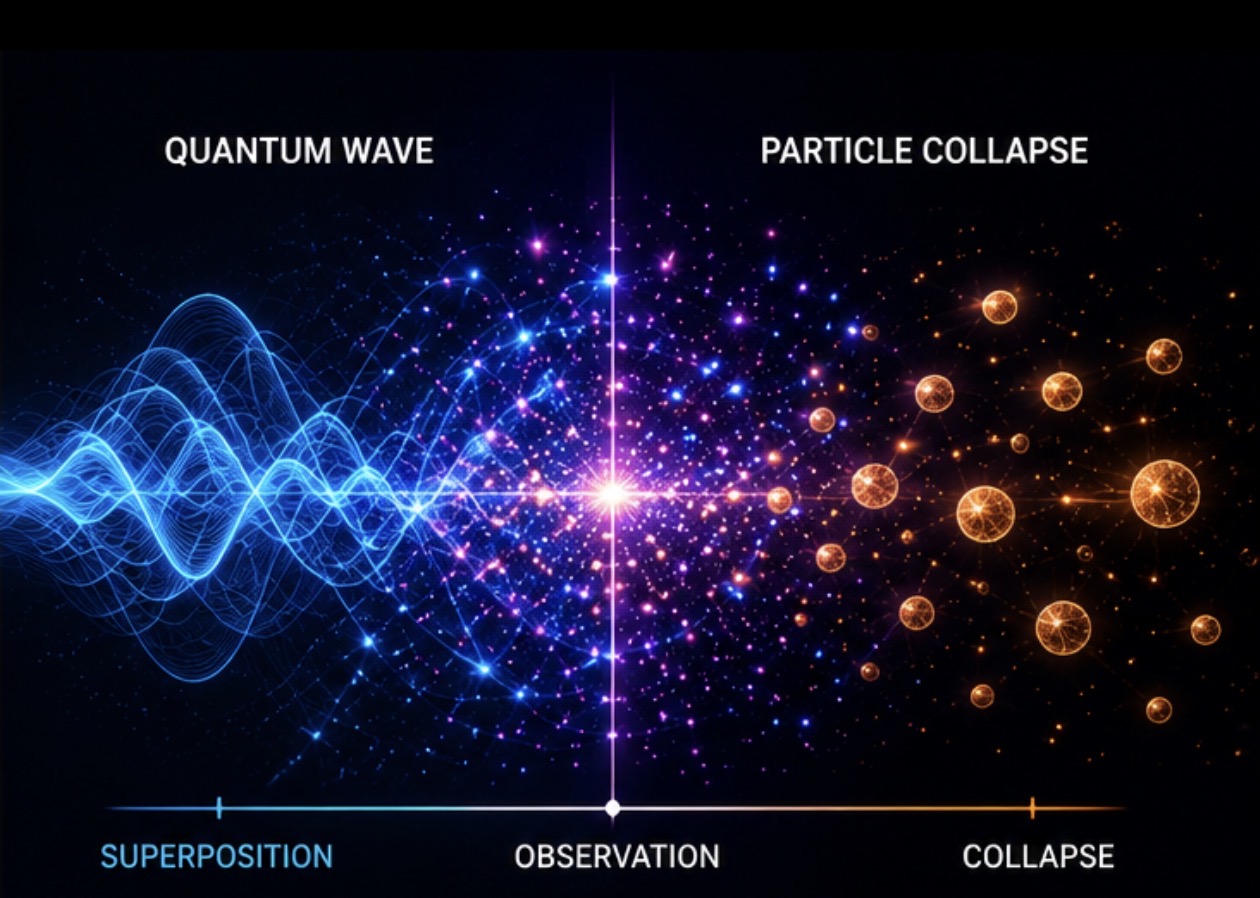
A new quantum physics study is drawing attention after researchers observed an unusual pattern in how subatomic systems behave. While the results do not break any known laws, they show behavior that scientists are still trying to fully explain.
The research comes from ongoing work in Quantum Physics, where scientists study how particles behave at extremely small scales.
⸻
🌌 What Scientists Actually Found
In recent experiments, researchers studying complex quantum systems noticed something unexpected: certain quantum behaviors showed structured interference patterns emerging from what should normally appear as random noise.
These effects were observed in controlled quantum simulation systems, where researchers track how information spreads and evolves in many-body quantum states.
One of the key challenges in quantum physics is that large quantum systems often "scramble" information quickly, making patterns extremely hard to detect. But in some modern experiments, scientists are finding ways to recover hidden structure.
⸻
⚛️ Why This Matters in Quantum Physics
Quantum systems are already known for strange behavior such as:
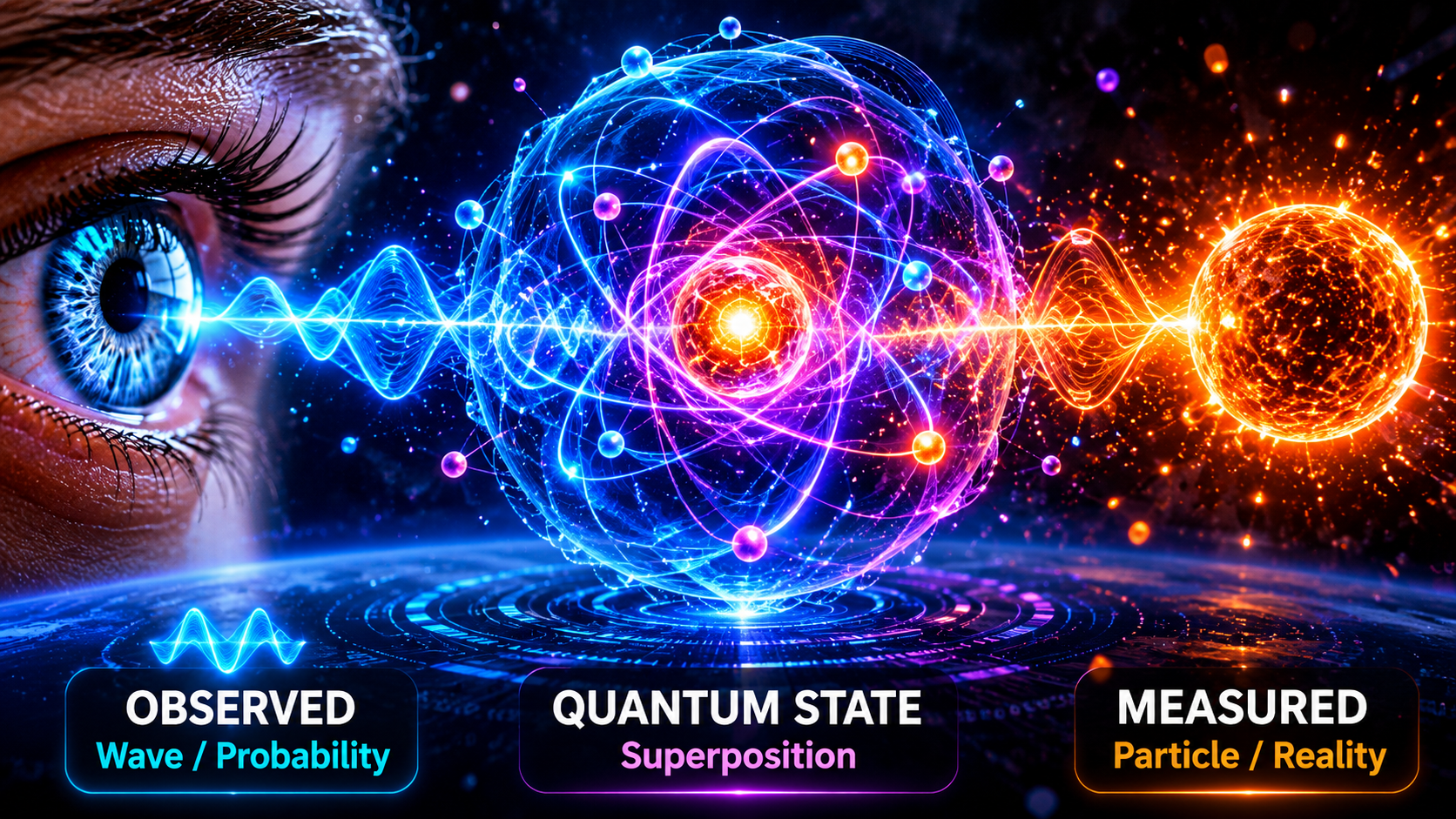
* superposition (multiple possible states at once) * entanglement (instant correlations between particles) * quantum interference patterns
But recent experiments suggest that even in highly chaotic quantum systems, organized structure can still emerge under certain conditions.
This does not mean reality is "breaking rules," but it does help scientists understand how quantum information behaves in extreme environments.
⸻
🧠 What Modern Research Shows (2025–2026)
Recent peer-reviewed studies support the idea that quantum systems can reveal hidden structure:
* A Nature (2025) study by Google Quantum AI showed interference effects at the edge of quantum chaos, revealing unexpected order in complex quantum dynamics * Research in Nature Physics (2025) demonstrated how entanglement combined with AI can improve precision quantum sensing * A Nature Physics (2025) paper on quantum networking showed large-scale controlled entanglement in atomic systems * CERN (2025) experiments continue to explore quantum behavior in antimatter systems using qubit-like structures
These studies do not claim a "new law of physics," but they do show that quantum systems can behave in more structured ways than previously expected.
⸻
🌍 Why Scientists Are Interested
Understanding these subtle quantum patterns could help improve:
* quantum computing stability * error correction in qubits * ultra-secure quantum communication * advanced sensing and measurement systems
Even small improvements in quantum control can lead to major technological breakthroughs.
⸻
🚨 What Scientists Are NOT Saying
Despite viral interpretations online, researchers are not claiming:
* reality is controlled by observation * quantum physics is "broken" * or that new fundamental laws have been discovered
Instead, they emphasize that these effects are part of ongoing research into quantum complexity and information flow.
⸻
🔬 Verified Scientific References
This article is based on recent peer-reviewed and institutional research:
* Google Quantum AI Collaboration — Nature (2025), quantum ergodicity and interference studies * Sinatra, A. — Nature Physics (2025), quantum sensors enhanced by entanglement and AI * Li et al. — Nature Physics (2025), quantum networking using atomic arrays * CERN BASE Collaboration — antimatter quantum state experiments (2025) * Physical Review Letters (2025–2026) — quantum chaos, entanglement, and information flow studies
⸻
🌌 Final Thought
Quantum physics is not showing that reality is "breaking." Instead, it is showing that reality at the smallest scale is far more structured and complex than we once thought.
And with every new experiment, scientists are getting closer to understanding how that hidden structure works.